
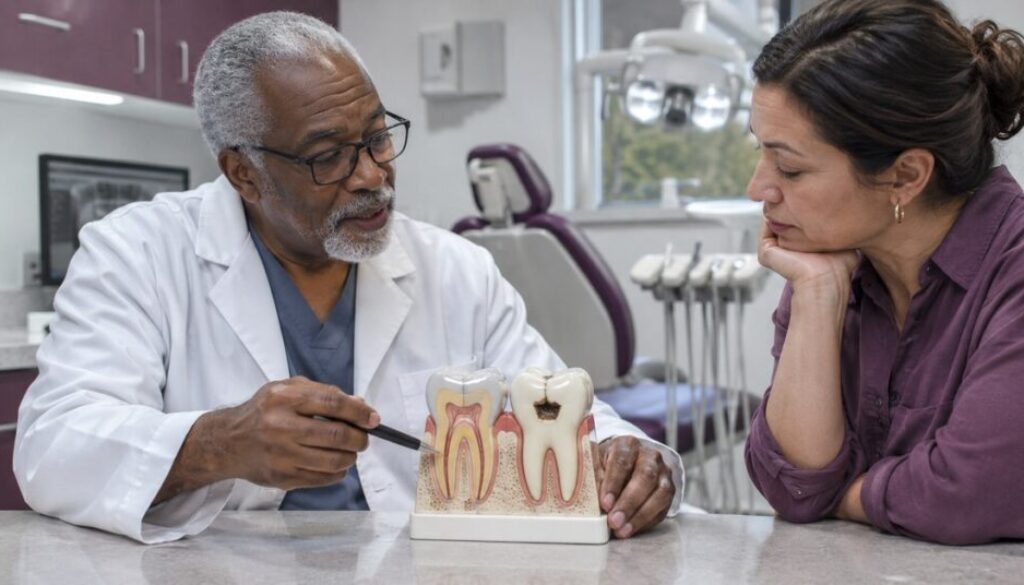
Root Canal vs Tooth Extraction: How Does a Dentist Decide?
The choice of root canal vs tooth extraction often sounds like a choice between two procedures. Start by asking whether the tooth can be treated and restored in a way that will work for you. That depends on what the dentist sees above and below the gum line.
What each procedure aims to do
Root canal treatment deals with infection or damage inside the tooth. The dentist cleans and fills the root canal system, and the tooth then needs an appropriate restoration. Extraction removes the tooth. If the tooth can’t be reliably restored, removal may be discussed. The expected result matters as much as the procedure itself.
What changes the recommendation
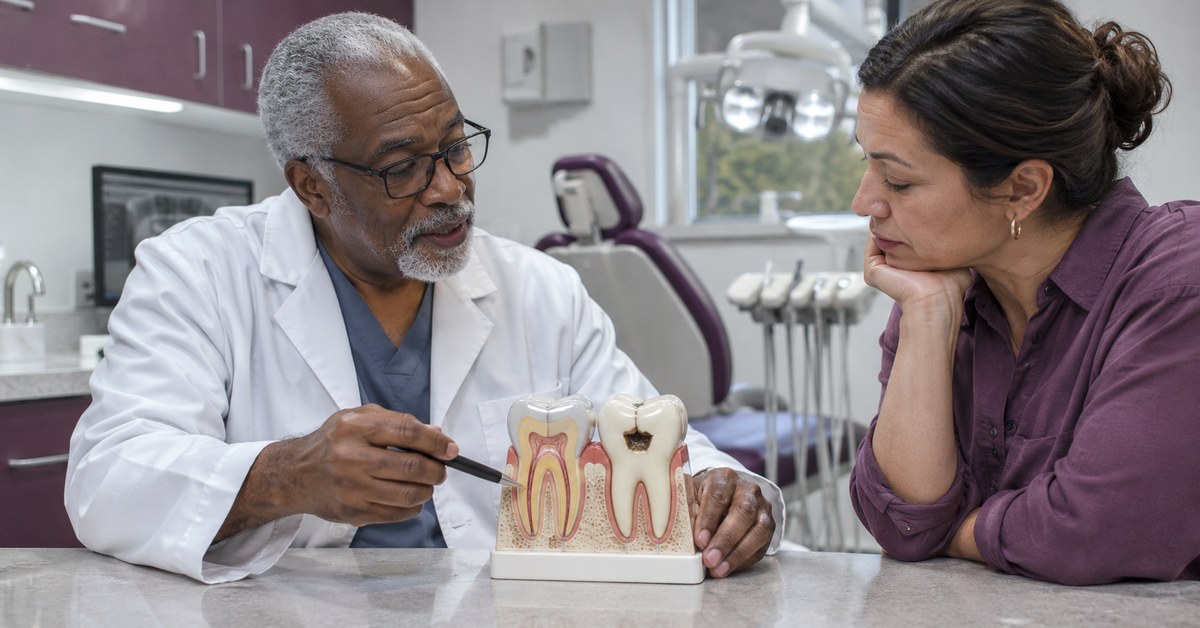
Ask how much sound tooth remains, whether there is a crack, and what the gum and bone support look like. A dentist may need X-rays and an examination to answer these questions. Ask how a filling or crown fits into the plan and whether another clinician needs to assess the tooth before you decide.
Compare the whole course of care
A tooth that’s removed may leave a space, so ask whether replacement makes sense in your case and what that would involve. For a tooth that may be saved, ask about follow-up, restoration and what could happen if treatment doesn’t work. If you have swelling, fever or rapidly worsening pain, contact a dentist promptly rather than waiting to compare options online.
How to compare two reasonable options
Ask the dentist to explain their estimate of the tooth’s outlook in plain language. If both choices are possible, clarify the visits, likely restoration and whether you’ll need another appointment before committing. If one option is unsuitable, ask which finding makes the difference. This conversation is especially useful if you’ve already had treatment on the tooth.
If the plan involves another dentist, confirm who takes the next step and how to contact the team if symptoms worsen.
What to write down before your visit
Start with which tooth hurts and whether pain wakes you or affects biting. Then mention any previous crown, filling or root canal on the tooth, and add a short note about whether preserving the tooth or limiting visits matters most to you. If one detail is uncertain, say what you remember rather than guessing. Start with the part that worries you most if it changes the reason for the visit.
Try to give one concrete comparison between a typical day and a day that prompted concern. Include when it happened and what you noticed first. If the change is hard to put into words, describe what you did differently because of it. That gives the clinician a starting point without asking you to guess what caused it.
If the appointment follows advice from another service, write down who gave it, what you understood and whether you were asked to do anything before returning. Take any instructions with you. Ask the new clinician how the recommendations fit together if the two visits address different parts of the same concern.
A short list of questions for your appointment
- Can this tooth be restored after root canal treatment?
- If it comes out, would I need to replace it?
- What could happen if I delay the recommended care?
Ask the clinician to show you an example if a point feels abstract. It can help to repeat their instructions in your own words. If two options are possible, ask what you need to consider now and what can wait until you’ve had time to think or gather information.
Ask the team to explain what to do if things don’t go as expected. For example, confirm whether to return sooner if something changes and whether a planned check can wait until a result arrives. Note the name of the service that will handle the next step so you know whom to contact.
Include a detail that doesn’t fit the pattern if you remember one. For example, something you expected to make the problem worse might have made no difference. Explain what you know and where you are unsure. The clinician may ask more questions before deciding which detail is relevant.
If you only have time to write one line, describe which tooth hurts and whether pain wakes you or affects biting. Add any previous crown, filling or root canal on the tooth if you can, and keep whether preserving the tooth or limiting visits matters most to you on your list of points to discuss. That keeps the conversation anchored to what you actually noticed. A useful record should help you tell the story rather than take the place of it.
At the end of the appointment, repeat the next step in your own words. Check who will do it, when it should happen and what to do if you can’t follow the original plan. Keeping those three details together can help you avoid an unnecessary delay or a second call to clarify what you agreed.
For a consultation, explore Lifeline’s General Dentistry service. Related reading: What to Eat After Tooth Extraction.
Source: nhs.uk patient guidance.