
Braces vs Clear Aligners: What Should You Compare?
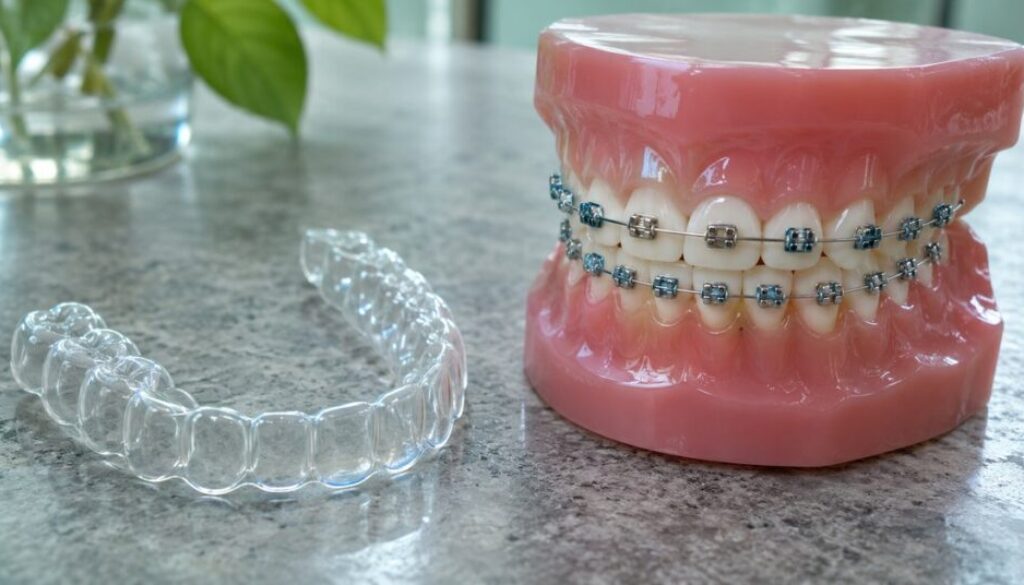
Comparing braces vs clear aligners is easier once you know what needs to move and what your daily routine can support. Visibility matters to many people, but it’s only one part of the decision. An orthodontist can explain which options are suitable for your bite and why.
How the two options fit into daily life
Fixed braces stay on the teeth between visits. You’ll need to learn to clean around brackets and follow advice about foods that can damage the appliance. Clear aligners come out for meals and cleaning. They only work as planned if you wear them for the prescribed time and keep track of tray changes.

Ask about the parts that aren’t shown in photos
Some aligner plans use tooth-coloured attachments or other aids. Fixed braces may involve elastics and adjustments. Ask how the orthodontist checks progress, what happens if teeth don’t move as expected and how the team deals with a lost tray or loose bracket.
Include retention in the decision
Both options need a discussion about retainers after active treatment. Ask what the quoted plan includes, who will handle follow-up and what to do if a retainer breaks. If more than one option is suitable, weigh practical differences such as travel, meals at work, cleaning and how confident you are about sticking to the routine.
Try the routine on paper before choosing
Think through a workday, a weekend meal and a trip. If you wear aligners, consider where you can remove, store and clean them. With fixed braces, think about brushing after meals and what you’d do if a bracket came loose away from home. The treatment routine should feel realistic on a busy day, not only when everything goes to plan.
A friend’s experience may be useful for questions to ask, but suitability depends on your own teeth and bite.
Bring the details that could change the next step
Start with your work or school routine and travel commitments. Then mention whether you can reliably wear and store removable trays, and add a short note about what you would find hardest about cleaning or maintenance. If one detail is uncertain, say what you remember rather than guessing. Start with the part that worries you most if it changes the reason for the visit.
Think about the part of the day where the concern has the biggest effect. It might be early morning, the journey to work, a regular meal, time at school or getting ready for sleep. Describe that moment in ordinary words and say what has changed. That detail helps make any advice more practical.
If the appointment follows advice from another service, write down who gave it, what you understood and whether you were asked to do anything before returning. Take any instructions with you. Ask the new clinician how the recommendations fit together if the two visits address different parts of the same concern.
A short list of questions for your appointment
- Which treatment is suitable for my bite and why?
- What follow-up, repairs and retainers does the plan include?
- What would make you change the plan partway through?
Ask the clinician to show you an example if a point feels abstract. It can help to repeat their instructions in your own words. If two options are possible, ask what you need to consider now and what can wait until you’ve had time to think or gather information.
Before leaving, check what would prompt another contact and who you should speak to. Make a separate note of any action that has a deadline. If you expect a call or report, ask whether the clinic will contact you or whether you need to follow it up.
Keep a note of what you learn at the visit and which question remains unanswered. That will be useful if you speak with a different member of the team next time. If you need to contact the clinic sooner, you can explain which part of the plan is unclear or what has changed.
If you only have time to write one line, describe your work or school routine and travel commitments. Add whether you can reliably wear and store removable trays if you can, and keep what you would find hardest about cleaning or maintenance on your list of points to discuss. That keeps the conversation anchored to what you actually noticed. A useful record should help you tell the story rather than take the place of it.
At the end of the appointment, repeat the next step in your own words. Check who will do it, when it should happen and what to do if you can’t follow the original plan. Keeping those three details together can help you avoid an unnecessary delay or a second call to clarify what you agreed.
For a consultation, explore Lifeline’s Orthodontics service. Related reading: What to Expect at an Orthodontic Consultation.
Source: bos.org.uk patient guidance.